Sylvia Plath
The Bell JarSylvia Plath was an American poet and novelist whose achievements and psychological suffering shaped the autobiographical ground of The Bell Jar without making the novel a simple transcription of her life. She published it in London in January 1963 under the pseudonym Victoria Lucas, partly because she doubted its literary seriousness and feared the pain it might cause to people whose personalities she had altered and disguised. The book’s bell jar thus holds two pressures at once: the isolating distortions of breakdown that it represents, and the difficult act of making private experience public.
Identity and Literary Formation
Plath entered Smith College in September 1950 on scholarships from the Wellesley Smith Club and the novelist Olive Higgins Prouty, who later became her friend and patron. Her college life joined conspicuous achievement to persistent misgiving. She followed a precise schedule for writing poetry, circled words in her father’s red-leather thesaurus, kept a detailed journal and scrapbook, and studied intensely. She also held class and college offices, served on the editorial board of The Smith Review, visited men’s colleges on weekends, and published stories and poems in Seventeen. Outward success, however, did not quiet her self-doubt: she wrote that her visible accomplishments stood beside “acres of misgivings and self-doubt.”
Her early successes brought her into increasingly public literary settings. In August 1951 she won Mademoiselle’s fiction contest with “Sunday at the Mintons”; during the following year she received two Smith poetry prizes and was elected to Phi Beta Kappa and Alpha, the college’s honorary society for the arts. In the summer of 1952 she became a guest editor in Mademoiselle’s College Board Contest. She described her month in New York as a salaried position in the magazine’s Madison Avenue offices, with a room at the Barbizon, meetings with celebrities, and entertainments with United Nations delegates, interpreters, and artists. The glittering pace was exhilarating, but the life of the magazine also supplied the model for the novel’s artificial, pressurized New York world.
Crisis, Recovery, and Marriage
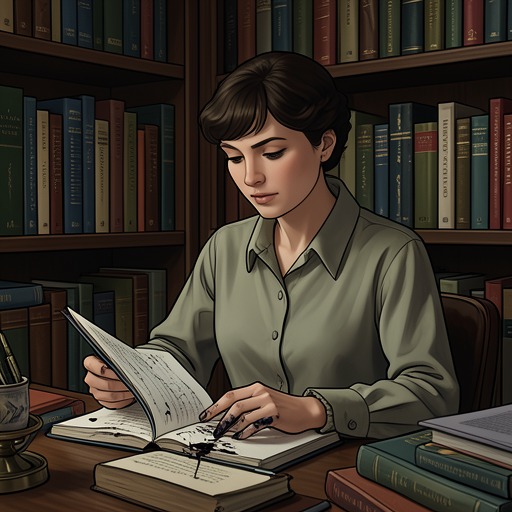
Plath’s formation as a writer unfolded alongside an increasingly sharp awareness of the conflict between a poet-intellectual’s life and the expected life of a wife and mother. She described feeling as though she had spent much of her life “in the rarefied atmosphere under a bell jar.” That image links her personal account to the novel’s governing metaphor, but the connection is not an identity between author and heroine: Plath’s later account of the book emphasizes fictionalization and distortion as well as lived material.
After a period of electroshock treatment and hospitalization for psychotherapy, Plath returned to Smith and described herself as having reconquered challenges that had previously thrown her off course. She characterized the close of a later semester as less spectacular but more solid than the year before. By the end of the next academic year she had sold more poems, earned further prizes, and completed an English honors paper on the double personality in Dostoyevski’s novels. She graduated summa cum laude in June 1955 and went to Newnham College at Cambridge University on a Fulbright year. There she met the British poet Ted Hughes; they married in London on June 16, 1956, Bloomsday. After her Fulbright was renewed and the couple spent another year in Cambridge, they moved to the United States in spring 1957. At Smith, colleagues judged Plath one of the department’s finest instructors.
Writing The Bell Jar
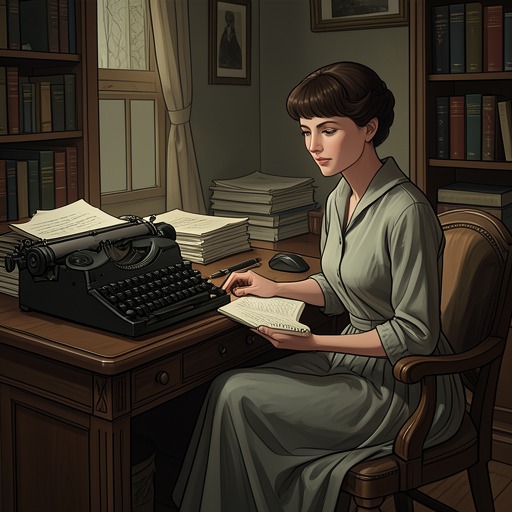
Plath had long wanted to write a novel but said she had been blocked by the undertaking for ten years. Negotiations with a New York publisher for an American edition of her poems helped precipitate a sudden change: she stayed awake through the night in excitement, saw how the novel should be done, and began writing the next day in a borrowed study, working there each morning as if at an office. In summer 1961 the Hugheses moved to Devon. On November 6, the Saxton trustees awarded Plath a grant of $2,080 to support her work; she replied that the money arrived at a particularly helpful time and that she planned to proceed with the novel.
The writing advanced according to a demanding schedule amid the division of days between children, housework, and work. In February 1962 Plath reported that she had drafted and revised Chapters 5 through 8, completing 105 pages, and had outlined Chapters 9 through 12. By May she had completed those chapters, pages 106 through 166, and projected the next part in a detailed outline. In June she told a friend she was writing again, with renewed confidence in the poems she wanted others to see and hear. The novel’s progress therefore belonged to a period of concentrated literary work, not simply to retrospective recollection of crisis.
Plath later called The Bell Jar “an autobiographical apprentice work which I had to write in order to free myself from the past.” That description presents the novel as both rooted in experience and deliberately limited by its purpose: it was a book through which she sought to move beyond earlier events, rather than the final statement of her literary ambitions. She considered a new novel about more recent events in her life stronger, more powerful, and more urgent. Her distinction between the two projects cautions against treating the heroine as an unmediated portrait of the author.
Publication, Fiction, and Personal Cost
The Bell Jar was first published in London in January 1963 by William Heinemann Limited, under the name Victoria Lucas. Plath chose the pseudonym because she questioned the book’s literary value and did not consider it a serious work. She also worried that people close to her might be hurt by its disguised, reshaped portrayals. The disguise was therefore not merely a device for presenting a novel to readers: it registered her awareness that fiction drawn from intimate life could injure the people whose experiences and personalities it transformed.
In 1970, Plath’s mother, Aurelia Plath, wrote to Sylvia’s editor at Harper & Row as the first American edition was anticipated. She warned of the personal suffering the publication might cause and recalled a conversation in early July 1962, when Plath spoke of pressure to meet the Saxton Fund obligation. Aurelia said her daughter had endured a miscarriage and an appendectomy and had given birth to her second child, Nicholas, during the period allotted for the book. Her account makes visible the physical and domestic circumstances behind the novel’s deadlines, while also presenting a mother’s retrospective argument against publication in the United States.
Aurelia recalled Plath explaining that she had assembled events from her own life and fictionalized them to add color, with the aim of showing how isolated a person feels during a breakdown. Plath described the book as her world and its people seen through the distorting lens of a bell jar; she said a second book would show the same world through the eyes of health. Aurelia added that nearly every character represented someone Plath loved, often in caricature, and that these people had offered time, thought, affection, and, in one case, financial help during the six months of breakdown in 1953. She feared that the novel, standing alone, would look like ingratitude, and recalled that her daughter was frightened as it became widely read and seemed likely to succeed. Her testimony does not cancel the work’s fictional transformation; it establishes how sharply that transformation could be felt by those who recognized themselves in it.
Last Winter and Legacy
After a vacation in Ireland, Plath and Hughes decided to separate for a while. She had suffered repeated bouts of flu with high fever, found another winter in Devon impossible, and began commuting to London to seek BBC work and a flat. The novel’s manuscript had gone to the Saxton trustees, while Heinemann had accepted it and was setting it in type. A few days before Christmas, Plath moved with the children to a London flat she had taken on a five-year lease. She regarded the discovery of the flat, which was Yeats’ house, as a sign and began planning with renewed assurance. The Ariel poems continued to come, as she turned toward new work even as the novel approached publication.
The London winter was exceptionally severe, with heat and light interrupted and pipes freezing. Plath worked on the Ariel poems each morning before her children woke at eight, while contending with illness and practical demands. She had seen a doctor who prescribed sedatives and arranged a psychotherapy consultation; she also wrote to her former psychiatrist in Boston. After dismissing an au pair, she waited for a replacement who could help in the mornings so she could write, explaining that by night she was too exhausted to do more than listen to music and drink brandy and water. These details place literary labor beside the ordinary arrangements and bodily strain that constrained it.
Friends’ help and the prospect of returning to Devon around May Day did not prevent her despair and illness. Yet the poems continued, including several in the final week of her life, and people around her often saw her as bright, cheerful, and hopeful rather than as someone who had visibly given up. On the morning of February 11, 1963, Plath died by suicide. Her ending makes the novel’s final uncertainty newly painful: the question of whether the bell jar might descend again is not an answer to her death, nor an explanation of it. It is a question that the novel had already placed inside its account of apparent recovery, keeping survival, relapse, and the limits of what can be known in uneasy suspension.